The $200 Million FAFSA Fraud - How Ghost Students Put Kenya in the Spotlight
US prosecutors allege a $200 million ghost-student fraud scheme, with Kenya-linked cases exposing how stolen identities and AI can be used to divert student aid.
The short version
US prosecutors allege that “ghost students” used stolen identities to obtain college aid, with some proceeds traced to associates in Kenya.
Authorities announced charges against five people and seized more than $750,000 in cryptocurrency in Kenya.
The $200 million estimate concerns the wider alleged fraud, not losses attributed solely to the Kenya-linked cases.
Investigators say AI helped complete paperwork and coursework, making fake students appear active.
The cases highlight the risks of identity theft and accepting commissions to move money for strangers.
Inside the ghost-student investigation
A US investigation into fraudulent college-aid applications has exposed an alleged network connecting American bank accounts with associates in Kenya. Prosecutors say participants enrolled “ghost students” using stolen identities, then diverted money intended to help students pay for their education.
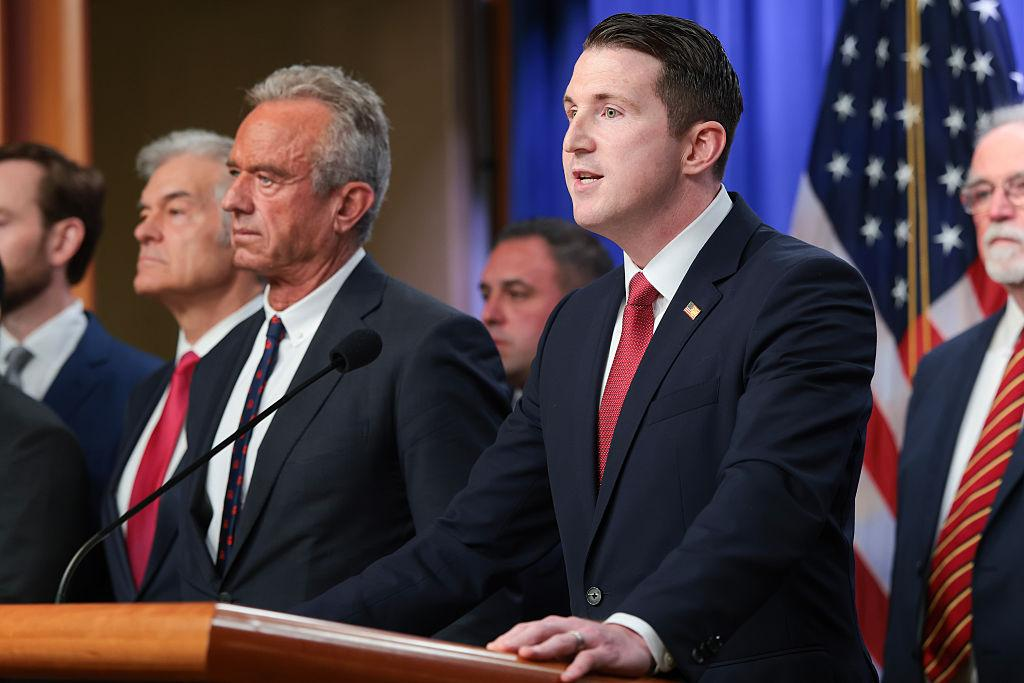
The Justice Department announced charges against five people and the seizure of more than $750,000 in cryptocurrency, about Sh97 million, under an effort it calls Operation Ghostbusters. It describes the seizure as the first of its kind in Kenya. The money was meant to help American students pay for college. According to the allegations, a good slice of it went somewhere else.
A word on the numbers before we go further, because they are easy to mix up. The $200 million is prosecutors' estimate for the wider fraud, not a loss pinned on anyone charged in Kenya. Separately, they have identified more than $32 million in losses from similar schemes, and flagged 830,840 student aid accounts as potentially fraudulent, tied to nearly $130 million. The seizure is its own figure again. They measure different things, so please don't add them up.
First, what is FAFSA?
FAFSA stands for the Free Application for Federal Student Aid - An American who wants help paying for college fills it in, and the government uses the answers to decide who gets а grants loan or work-study money. The college takes its tuition and fees first. If anything is left over, the school pays the balance to the student as a refund, meant for rent, books and food. Hold on to that word, refund. The whole story turns on it.
The students who never existed
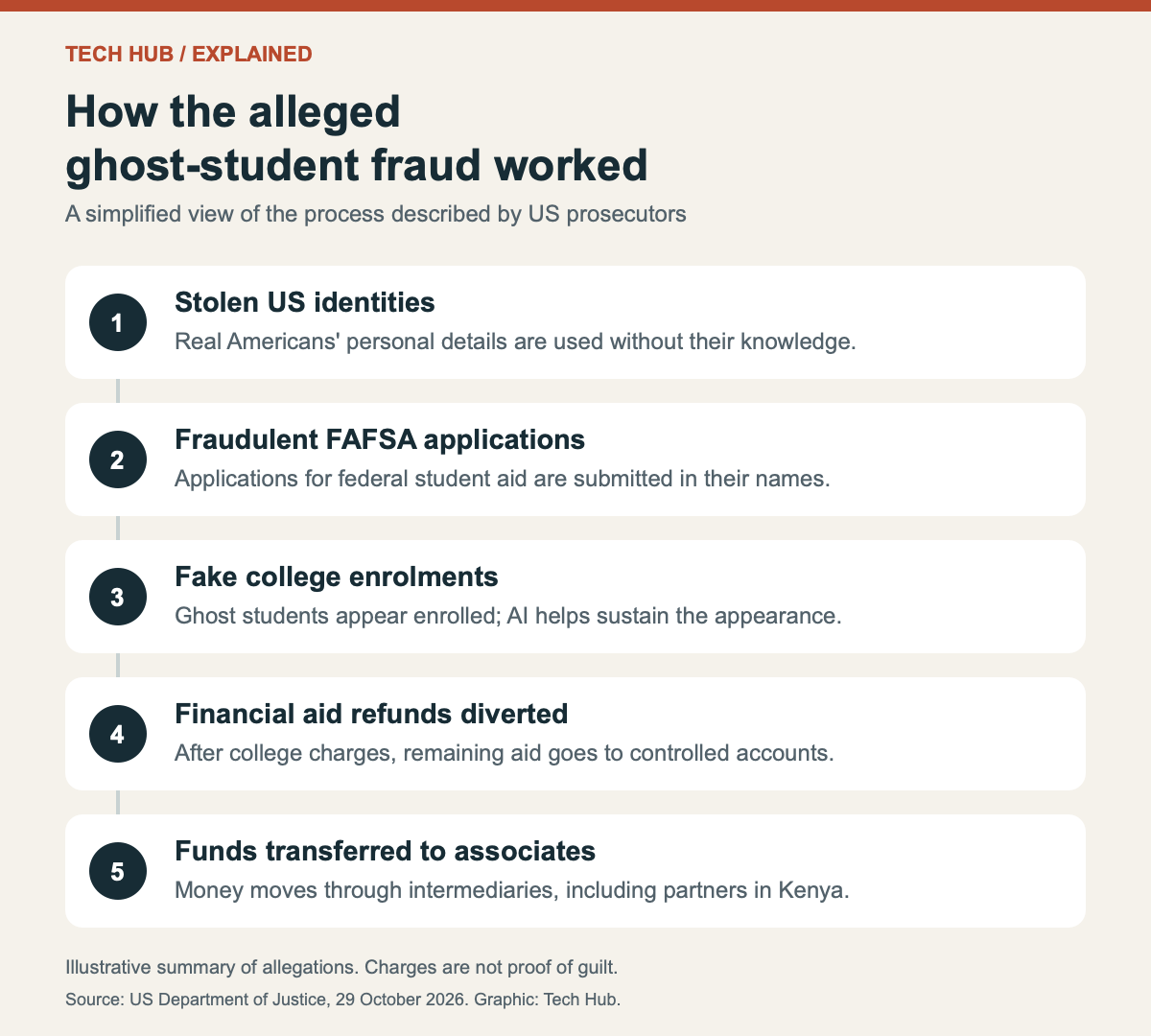
Prosecutors describe a simple recipe. Take the name, birth date and Social Security number of a real American who has no idea what is coming. Use them to open a federal student aid account and apply for money as that person. Enrol the "student" at a college, where the paperwork can often be handled entirely online. Then wait for the aid to be approved, the tuition to be paid and the refund to land in a bank account the fraudsters control.
The Justice Department calls these invented applicants ghost students, and says they were enrolled with no intention of ever sitting in a class. Which leaves an obvious puzzle. How does someone who isn't there pass a semester? We will get to that.
Where does Kenya come in?
The announcement covered several cases. In Nebraska, a federal grand jury indicted Francis Mogambi, a Kenyan national, who is accused of working with associates in Kenya to steal identities, enrol ghost students and collect the aid. Reports say he kept 30 percent and sent the rest back. In New Jersey, three people were arrested on allegations that they received aid payments, took a share and passed money on to partners in Kenya linked to a purported safari company.
Prosecutors say they are also pursuing two alleged co-conspirators in Kenya, who have not been charged. Kenya's Directorate of Criminal Investigations - the Asset Recovery Agency and the Office of the Director of Public Prosecutions - are working with US investigators. Assistant Attorney General Colin McDonald put the message bluntly: "Whether you are in Nebraska, New Jersey, Virginia, or Nairobi, we will pursue you."
Every person named here is accused, not convicted. Being linked to a case is not the same as being guilty of it, and the line between charged and not charged matters.
Did technology make this possible?
Part of the answer comes straight from the Justice Department, which says the participants used artificial intelligence to complete paperwork and coursework so the ghost students looked like they were attending. That is the piece that makes this a tech story. The old giveaway of a fake student, someone who never logs in and never hands anything in, can now be covered up by software.
What follows is analysis, not findings. Student aid systems work by checking one piece of data against another, and the data was the weak spot. Years of breaches have left huge piles of personal details in circulation, so a name and a number come cheap. Online enrolment never sees a face. Refunds then move from account to account and, in this case, into cryptocurrency, crossing borders faster than any investigator can fill in a request form.
Washington has noticed. A bill called the No Aid for Ghost Students Act cleared a House committee in March. It would require the Education Department to run identity fraud checks on applications and verify suspicious applicants before aid goes out.
What this means for ordinary people
The people hurt most by fraud like this are often the real ones, whose names get borrowed. A victim might find out through a letter from a college they never applied to, a loan notice, a tax form for income they never earned, or a credit report with surprises on it.
A few habits help. Check your credit report now and then, and freeze it if your country allows that. Treat your ID number, KRA PIN and M-Pesa details like house keys, and think twice before sending a photo of your ID to anyone. Use a different password for every account and switch on two-step verification. And if someone offers you а commission to let money pass through your bank account, you are not being offered a job. You are being recruited as a money mule, and the courts do not care that you were only the middleman.
A system built to help people pay for school was fooled by people who were never in school. The lesson for the rest of us is plain: a name and a number are not a person, and the sooner the systems we rely on learn that, the fewer ghosts they will pay.