Editorial sample · Researched demo content, not original reporting or hands-on testing. Edit or remove this story from the CMS.
HTTPS protects the connection. It does not certify every claim on the page
An encrypted link and a trustworthy business are different things. Understanding the distinction helps you browse more carefully.
HTTPS is HTTP carried over a connection protected by Transport Layer Security, usually called TLS. It helps protect data moving between a browser and a website. Cloudflare’s HTTPS explainer describes that relationship.
Protecting data on the journey
TLS provides encryption and connection-integrity protections, and certificates support server authentication. This is why a login form should not send a password over an unprotected HTTP connection.
The distinction is about the connection, not whether an article is accurate or a seller will deliver a product. A misleading website can still use HTTPS.
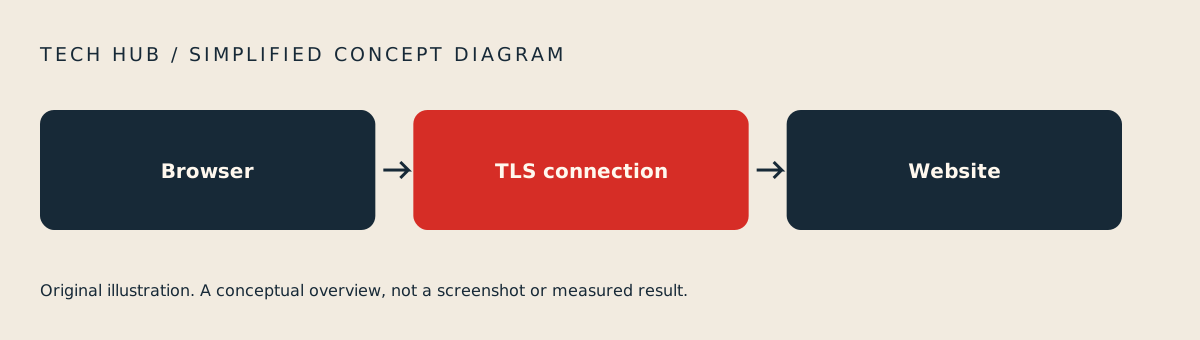
Original Tech Hub conceptual illustration; not a screenshot.
A useful everyday example
Imagine receiving a link to a familiar-looking account page. Even when the connection is encrypted, the domain may belong to someone else. Encryption can protect traffic to the wrong destination perfectly well.
Our practical interpretation is that checking the address and knowing how you reached the page remain important. Connection security is one part of an assessment, not a replacement for it.
What a warning should mean
If your browser presents a certificate or connection-security warning, stop and investigate through a known route. Do not treat instructions on the suspicious page as evidence that it is safe to ignore the warning.
For a site owner, the corresponding responsibility is to keep certificates and links working correctly, rather than ask visitors to make exceptions.
Keep the layers separate
A domain name identifies the requested destination. TLS protects and authenticates the connection according to its certificate checks. The application then decides what to display and how to handle data.
That layered view explains why a secure connection is necessary for sensitive forms, but not sufficient to establish a website’s honesty. This sample is an educational explanation, not a security assessment of any particular website.
Editorial sample researched on 6 October 2026. Review articles are documentation-based assessments, not hands-on tests. Sources may change after that date. Original Tech Hub illustrations; no third-party news photographs.